Package Image
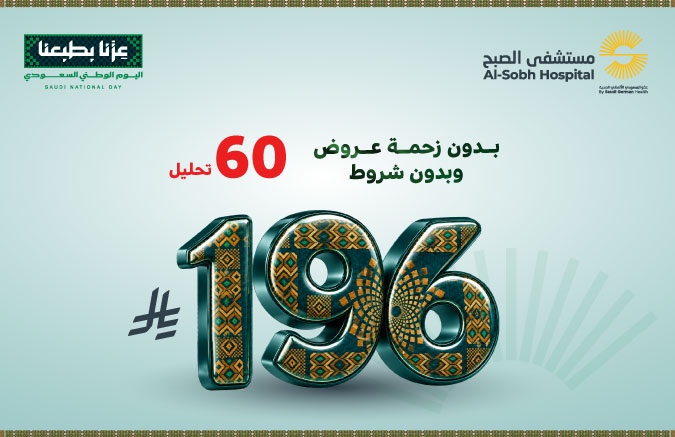
Home Tests National Day 96 Comprehensive Package

National Day 96 Comprehensive Package

Al-Rehab - Jeddah - 145KM

A comprehensive package of laboratory tests to assess overall health and monitor key health indicators, offered in celebration of Saudi National Day. Fasting is required.

Package Contains
A complete blood count (CBC) is a blood test used to evaluate your overall health and detect a wide range of disorders, including anemia, infection and leukemia.
A urinalysis is a simple test that looks at a small sample of your urine. It can help find problems that need treatment, including infections or kidney problems. It can also help find serious diseases in the early stages, like kidney disease, diabetes, or liver disease.
A transferrin saturation test tells us how much iron in the blood is bound to transferrin. A low transferrin saturation usually indicates iron deficiency while a high saturation often confirms haemochromatosis.
A calcium blood test measures the amount of calcium in your blood. Calcium is one of the most important minerals in your body. You need calcium for healthy bones and teeth. Calcium is also essential for proper functioning of your nerves, muscles, and heart.
A complete cholesterol test - also called a lipid panel or lipid profile - is a blood test that can measure the amount of cholesterol and triglycerides in your blood.
A high-density lipoprotein (HDL) test measures the level of good cholesterol in your blood. Cholesterol is a waxy substance that’s found in all of the cells in your body. It has several different functions, including helping to build your body’s cells. Cholesterol is carried through the bloodstream attached to proteins called lipoproteins.
This test measures how well your kidneys are performing their job of filtering waste from your blood. Creatinine is a chemical compound left over from energy-producing processes in your muscles. Healthy kidneys filter creatinine out of the blood. Creatinine exits your body as a waste product in urine
The Chloride test is a laboratory blood test used to measure the level of chloride ions, one of the essential electrolytes in the body. Chloride plays an important role in maintaining fluid balance inside and outside cells, regulating acid–base balance, and supporting normal nerve and muscle function.
A sodium blood test measures the amount of sodium in your blood. Sodium is a type of electrolyte. Electrolytes are electrically charged minerals that help maintain fluid levels and the balance of chemicals in your body called acids and bases. Sodium also helps your nerves and muscles work properly.
A potassium blood test measures the amount of potassium in your blood. Potassium is a type of electrolyte. Electrolytes are electrically charged minerals in your body that help control muscle and nerve activity, maintain fluid levels, and perform other important functions. Your body needs potassium to help your heart and muscles work properly.
This test measures blood sugar after an overnight fast (not eating). High fasting blood sugar levels point to insulin resistance or diabetes, while abnormally low fasting blood sugar could be due to diabetes medications.
Iron tests measure different substances in the blood to check iron levels in your body. Iron is a mineral that's essential for making red blood cells. Red blood cells carry oxygen from your lungs to the rest of your body. Iron is also important for healthy muscles, bone marrow, and organ function. Iron levels that are too low or too high can cause serious health problems.
A magnesium blood test measures the amount of magnesium in your blood. Magnesium is a type of electrolyte. Electrolytes are electrically charged minerals that are responsible for many important functions and processes in your body.
The serum phosphate test measures the amount of inorganic phosphate in your blood plasma (the liquid part of blood). In the body, phosphorus is combined with oxygen to form a variety of phosphates (PO4). Phosphates are vital for energy production, muscle and nerve function, and bone growth.
The Aspartate Aminotransferase (AST) test is a laboratory blood test used to measure the level of the AST enzyme in the blood. AST is found mainly in the liver, as well as in the heart and muscles. This test helps assess liver health, diagnose and monitor liver diseases, and may also indicate muscle or cardiac injury when elevated.
This test is done to measure the amount of Glutamate Pyruvate Transaminase (GPT) in blood serum. GPT is an enzyme found in heart cells, kidney, muscles and liver, this test is needed on a regular basis to keep the liver in a healthy state
A total iron-binding capacity (TIBC) test measures the bloods ability to attach itself to iron and transport it around the body. A transferrin test is similar. If you have iron deficiency (a lack of iron in your blood), your iron level will be low but your TIBC will be high. If you have too much iron (for example, if you have a condition like haemochromatosis), your iron level will be high but your TIBC will be low or normal.
A triglycerides test measures the amount of triglycerides in your blood. Triglycerides are a type of fat in your body. If you eat more calories than you need, the extra calories are changed into triglycerides. These triglycerides are stored in your fat cells for later use. When your body needs energy, triglycerides are released into your bloodstream to provide fuel for your muscles to work. If you eat more calories than you burn off, especially calories from carbohydrates and fats, you may get high triglyceride levels in your blood. High triglycerides may put you at greater risk for a heart attack or stroke.
This test measures the amount of nitrogen in your blood that comes from the waste product urea. Urea is made when protein is broken down in your body. A BUN test is done to see how well your kidneys are working.
A uric acid blood test, also known as a serum uric acid measurement, determines how much uric acid is present in your blood. The test can help determine how well your body produces and removes uric acid.
A transferrin test is carried out to directly measure the level of iron in the blood and also the bodys ability to transport iron in the blood. The transferrin blood test is ordered if the doctor suspects abnormalities of iron levels in your body. The tests help diagnose chronic iron overload or deficiency
Vitamin B-12 (cobalamin) plays an essential role in red blood cell formation, cell metabolism, nerve function and the production of DNA, the molecules inside cells that carry genetic information, Left untreated, a vitamin B-12 deficiency can lead to anemia, fatigue, muscle weakness, intestinal problems, nerve damage and mood disturbances.
Vitamin D is essential for several reasons, including maintaining healthy bones and teeth. It may also protect against a range of diseases and conditions, such as type 1 diabetes.
LDL tests are a form of blood test that doctors use to measure the amount of LDL cholesterol in a persons bloodstream. LDL tests can be part of a lipid panel test, or they can measure LDL levels directly. Lipid panels can help doctors calculate LDL cholesterol levels by measuring the following: total cholesterol.
The Estimated Glomerular Filtration Rate (eGFR) is a test used to assess kidney function by estimating how well the kidneys filter waste from the blood. It is typically calculated using serum creatinine along with factors such as age and sex. This test helps in the early detection of kidney disease, staging of renal impairment, and monitoring disease progression.

Still have a questions ?

Get to know our services or find answers to any lingering questions, right here, right now.